







Solar irrigation systems
Business Model Description
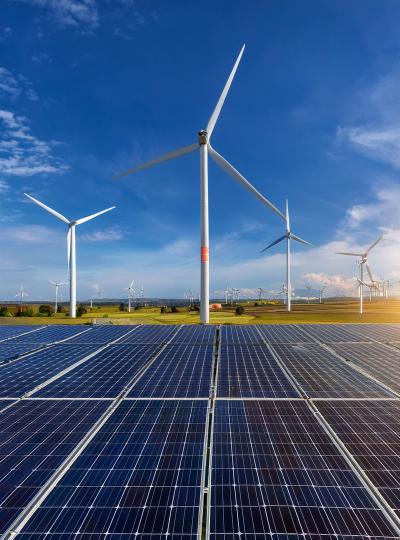
Provide solar irrigation solutions and maintenance services to farmers, including small scale producers through adapted financing modalities, such as the pay-as-you-go model (leasing). The offer can be complemented with training on the usage of the equipment.
Expected Impact
Production and maintenance of solar irrigation systems reduces farmers dependence on fuel, decreases GHG emissions, increases crop yields and farmers revenues, while strengthening small businesses' autonomy through affordable financing and digital tools.
How is this information gathered?
Investment opportunities with potential to contribute to sustainable development are based on country-level SDG Investor Maps.
Disclaimer
UNDP, the Private Finance for the SDGs, and their affiliates (collectively “UNDP”) do not seek or solicit investment for programmes, projects, or opportunities described on this site (collectively “Programmes”) or any other Programmes, and nothing on this page should constitute a solicitation for investment. The actors listed on this site are not partners of UNDP, and their inclusion should not be construed as an endorsement or recommendation by UNDP for any relationship or investment.
The descriptions on this page are provided for informational purposes only. Only companies and enterprises that appear under the case study tab have been validated and vetted through UNDP programmes such as the Growth Stage Impact Ventures (GSIV), Business Call to Action (BCtA), or through other UN agencies. Even then, under no circumstances should their appearance on this website be construed as an endorsement for any relationship or investment. UNDP assumes no liability for investment losses directly or indirectly resulting from recommendations made, implied, or inferred by its research. Likewise, UNDP assumes no claim to investment gains directly or indirectly resulting from trading profits, investment management, or advisory fees obtained by following investment recommendations made, implied, or inferred by its research.
Investment involves risk, and all investments should be made with the supervision of a professional investment manager or advisor. The materials on the website are not an offer to sell or a solicitation of an offer to buy any investment, security, or commodity, nor shall any security be offered or sold to any person, in any jurisdiction in which such offer would be unlawful under the securities laws of such jurisdiction.
Country & Regions
- Senegal: Dakar
- Senegal: Nord
- Senegal: Centre
- Senegal: Sud
Sector Classification
Food and Beverage
Development need
Senegal faces low food sovereignty and imported 70% of its food products in 2024. It also faces low food security with 21% of the population being food insecure, in 2023. The sector is also characterized by a low productivity, contributing 15.5% GDP in 2024. Finally, the sector is a significant contributor to GHG emissions but is vulnerable to climate change (1, 2, 3, 4).
"Policy priority
The Strategie Nationale de Developpement 2025-2029 aims at increasing the agricultural productivity and fostering its modernization. The Stratégie Nationale de Sécurité Alimentaire et de Résilience 2015-2035 highlights the need for increased and diversified agricultural production as well as the importance of food processing and conservation to enhance food security (5, 6).
"
Gender inequalities and marginalization issues
Women represent more than half of the country’s labor force in the rural sector and significantly contribute to agricultural production, being highly active in processing and marketing of agricultural, livestock and fishery products. Yet, only 6% of them own agricultural land. For the others, their access to land largely depends on men relatives, who owns the land, affecting their land tenure security. Coastal agricultural communities in Senegal also face heightened climate risks due to sea level rise, flooding, and erosion, adding to broader national vulnerabilities linked to erratic rainfall, rising temperatures, and desertification. Finally, climate change reinforces food insecurity particularly for the poorest households (7, 8, 9, 17).
Investment opportunities introduction
Senegal agricultural sector contributed 15.5% of GDP in 2024. To increase the sector productivity, investments in means and tools of production is key. It is particularly the case in agricultural mechanization, adapted storage and water management for agricultural production (5, 10).
Key bottlenecks introduction
Senegal’s agri-food industry faces climate vulnerability, low processing, poor infrastructure, and low mechanization, as well as weak market access, price volatility and weak regulations. The low access to finance and insurance reinforced farmers vulnerability. Strong dependence on imports and competition also are structural challenges for the sector (11, 12, 13)
Food and Agriculture
Development need
Senegal’s agricultural sector faces low productivity with 30% post-harvest losses and low processing capacity, resulting in productivity 30% below the national average and low added value. Post-harvest loss cost USD 167 million annually. Climate change will affect traditional cash crop production such as ground nuts with decrease in yields between 5-25% (11, 14, 15, 22).
Policy priority
The Strategie Nationale de Souverainete Alimentaire (2024–2028) aims at reducing food imports and ensure self-sufficiency in key food products, such as cereals, key vegetables, eggs and milk production. The Stratégie Nationale d'Industrialisation encourages increased agricultrual product processing through the development of infrastructures (12, 16).
Gender inequalities and marginalization issues
Poverty is highly concentrated in rural groundnut production basins—especially Diourbel, Kaolack, and Thiès—which together host about one-third of Senegal’s poor, compounding climate vulnerability for smallholders, including many women. In addition to climate vulnerability (floods, drought and storms), women in the agricultural sector also face significant challenges related to their land tenure rights and their limited access to financing mechanisms, production inputs, and extension services, as well as restricted market access. Finally, climate shocks particularly affects the livelihoods of rural households relying on livestock and agriculture for subsistence (14, 17, 18, 21).
Investment opportunities introduction
Senegal’s Climate Smart Agriculture Plan prioritizes investments in solar irrigation, climate-resilient seeds, storage, and climate services to boost the sector's modernization and resilience. Processing and high-value agricultural and fish products are also key to increasing the sector value added (9, 19, 20).
Key bottlenecks introduction
Limited irrigation, degraded soils, low mechanization, and weak rural infrastructure are major challenges to the agricultural sector productivity, as well as difficulties in feeding and watering livestock, problems related to animal health, access to quality seeds and intrants and the high climate vulnerability, particularly threatening rural livelihoods (12, 13).
Agricultural Products
Pipeline Opportunity
Solar irrigation systems
Provide solar irrigation solutions and maintenance services to farmers, including small scale producers through adapted financing modalities, such as the pay-as-you-go model (leasing). The offer can be complemented with training on the usage of the equipment.
Business Case
Market Size and Environment
USD 50 million - USD 100 million
In Senegal, only about 20% of the land suitable for irrigation is under irrigation (28).
The market for solar PV irrigation systems is estimated at USD 64.9-131 million in Senegal, based on a market penetration rate ranging between 25%-50% (27).
According to a cost-benefits analysis on solar irrigation in the Niayes region, 85% of the cases, farmers directly buy solar irrigation equipment from suppliers, in majority with personal funds and through loans (29).
Indicative Return
20% - 25%
The solar irrigation system reseller’s margin estimate was based on the sale price of solar submersible pumps imported from China by Senegalese traders via Chinese e-commerce platforms (30).
Investment Timeframe
Medium Term (5–10 years)
According to a profitability analysis on the use of solar irrigation compared to diesel or grid systems, farmer's loans to buy the solar irrigation system are expected to be repaid after 5 to 7 years, with a 2 years grace period (28).
Ticket Size
USD 500,000 - USD 1 million
Market Risks & Scale Obstacles
Capital - CapEx Intensive
Business - Supply Chain Constraints
Impact Case
Sustainable Development Need
Rain-fed agriculture dominates Senegal's agriculture. Currently, only about 20% of the land suitable for irrigation is irrigated and 90% of farming households continue to practice rainfed agriculture. Overall, 2.1% of Senegal’s total cropland is equipped for irrigation, even though the country’s potential irrigable area is estimated at around 409,000 hectares (31).
Farmers rely on costly diesel pumps for their irrigation which causes high seasonal expenses that could finance a durable and less costly solar system on the mid to long term. For instance, a cooperative of around 100 farmers spend USD 403 (XAF 225,329) yearly for the purchase of diesel fuel. They also require frequent maintenance (32, 33).
Diesel irrigation is contributing to GHG emissions and pollution of agricultural lands. Although specific nationwide emissions from diesel irrigation are not reported, agriculture in Senegal contributes approximately 41 % of national GHG emissions (excluding LULUCF). Under its Nationally Determined Contribution, Senegal commits to reducing GHG emissions by 7 % unconditionally by 2030 (4, 33).
Gender & Marginalisation
Women farmers in Senegal are predominantly engaged in rain-fed agriculture. Over 92% of irrigated crop production is managed and harvested by men. Women also face lower access to modern irrigation solution and as a result, face heavier physical burdens from manual irrigation (29, 34).
Women in rural zones often lack affordable or stable internet, limiting their ability to access mobile-based advisory services, weather forecasts, or smartphone apps for climate-smart agriculture. Lower digital literacy and fewer opportunities to use advanced technology make it harder for them to benefit from new innovations, including modern irrigation systems (35).
Northern regions, especially Saint-Louis, face extreme droughts, while Matam, Tambacounda and Louga are prone to intense rain events. Combined with decreasing and variable rainfall, this is expected to reduce agricultural yields by up to 30%, hitting rain-fed farmers hardest (35).
Expected Development Outcome
Solar irrigation saves about 4,320 litres of fuel annually, avoiding around 11,234 kg of CO₂ emissions per system. Solar irrigation systems presents 95% less emissions than diesel-based irrigation, thereby decreasing the emissions from the agricultural sector (29).
Although solar irrigation systems entail higher upfront costs, approximately USD 1.100 (XAF 621,437) per hectare compared to USD 200 (XAF 118,191) per hectare for diesel, they offer significantly lower annual operating expenses. On the longer term, solar irrigation also generates higher revenues. This cost-efficiency over time allows farmers to enhance their income while reducing dependence on fossil fuels (29).
Drip irrigation specifically improves water efficiency and reduces evaporation losses under drought conditions. For example, in Senegal and neighboring countries, solar-powered irrigation systems have achieved 18% or more water savings compared to conventional gravity methods and 2-3 times greater water productivity and economic returns (29).
Gender & Marginalisation
Solar irrigation reduces women’s workload by replacing manual irrigation with sustainably powered irrigation systems. If included in planning, it also increases women’s access to irrigation and productive agricultural resources contributing to improved incomes (36).
Solar-powered irrigation enables women and youth farmers to cultivate larger areas year-round, diversify into higher-value crops, and reduce production losses linked to rainfall variability. These gains increase agricultural productivity and income, strengthening women’s and youth’s economic autonomy and resilience to climate shocks (29).
Solar irrigation systems increase resilience of rain-fed farming communities in regions with high climatic variability, through adoption of climate-smart agricultural practices and improved water management (37).
Primary SDGs addressed
2.3.1 Volume of production per labour unit by classes of farming/pastoral/forestry enterprise size
In 2022, the productivity of small-scale food producers in Senegal was 10.3 measured as agricultural output per labor day (in Purchasing Power Parity which adjusts possible differences in local purchasing power) (38).
By 2029, the Government of Senegal aims to strengthen the resilience of smallholder farmers and enhance agricultural productivity. The WFP programme seeks to improve the livelihoods and food and water security of approximately 169,200 households across nine regions (1).
6.4.1 Change in water-use efficiency over time
In 2022, change in water use efficiency in agriculture sector has been measured as USD 0.09 per m3 (38).
Senegal aims to achieve universal access to water and to ensure that at least 80% of the population has access to basic sanitation services (5).
13.2.2 Total greenhouse gas emissions per year
Carbone dioxide emissions excluding LULUCF were of 0.7 tons per capita in 2023. Agriculture contributed to 36% of GHG emissions in 2022 (10).
Senegal targets 7% reduction in GHG emissions unconditionally and 29% conditionally by 2030 (4).
Secondary SDGs addressed
Directly impacted stakeholders
People
Gender inequality and/or marginalization
Planet
Corporates
Public sector
Indirectly impacted stakeholders
People
Gender inequality and/or marginalization
Planet
Corporates
Public sector
Outcome Risks
If the price is too high, it might reinforce the unequal adoption of solar irrigation between large and small farmers could widen productivity gaps and income inequality.
Over-extraction of groundwater from increased irrigation capacity may worsen water scarcity, especially in drought period and drought affected regions.
Environmental risks may arise from the improper disposal or recycling of solar equipment.
Gender inequality and/or marginalization risk: Women farmers may face barriers to access (financing, training, technology), limiting their ability to benefit fully.
Impact Risks
Without training on water management and ensuring access to sufficient and quality water sources the installation might not reach the expected impact in terms of increase in the production (40).
Climate shocks such as droughts or floods could undermine the expected agricultural gains from solar irrigation.
Limited financing options for farmers and high upfront costs could slow the adoption of solar irrigation and reduce the expected impact. In addition, poor solar system maintenance could increase production costs and reduce expected efficiency.
Gender inequality and/or marginalization risk: Failure to ensure inclusive program design may reinforce gender gaps in agricultural technology adoption.
Impact Classification
What
Solar irrigation enhances agricultural productivity, cut irrigation costs, reduce dependence on diesel and lower GHG emissions, improving the sector's sustainability and resilience.
Who
Direct beneficiaries are farmers and smallholder farmers, especially women and youth, rural cooperatives, agri-SMEs. Indirect beneficiaries are rural communities and food value chains.
Risk
Risks include high upfront investment costs, lack of maintenance capacity and unequal access to technology, which could exclude the most vulnerable farmers, particularly women.
Contribution
Solar irrigation systems reduce GHG emissions from the sector, contributing to Senegal's objective to reduce agricultural emissions of 2.36% by 2030 (4).
How Much
Solar irrigation is the most cost-efficient model with a levelized cost of electricity of EUR 0.41/kWh vs. EUR 0.57/kWh for diesel. Solar systems can reduce GHG emissions by 95% (28, 29).
Impact Thesis
Production and maintenance of solar irrigation systems reduces farmers dependence on fuel, decreases GHG emissions, increases crop yields and farmers revenues, while strengthening small businesses' autonomy through affordable financing and digital tools.
Enabling Environment
Policy Environment
Stratégie Nationale de Développement 2025-2029: promotes the spread of sustainable production through sustainable equipment, encourages a better water control with decreased costs, and supports the establishment of support infrastructure for the agricultural sector (5).
Nationally Determined Contribution: identifies irrigation as a climate adaptation measure for the agricultural sector (4).
Stratégie Nationale de Souveraineté Alimentaire 2024-2029: identifies water control through irrigation as a priority adaptation action by 2025-2030 (12).
Financial Environment
Financial incentives: La Banque Agricole launched Woomal Mbay, a solar irrigation solutions for agro-businesses, Economic Interest Groups, or individual farmers. The bank offers financing scheme with an interest rates of 7,5% and a reimbursement over 36 months (24).
Financial incentives: FONSIS offers investment support to projects in the fields of renewable energy and agro-business with minority participation (private equity) through his funds as well as technical assistance to SMEs for project bankability (46).
Financial incentives: Banque Agricole du Senegal with the support of the European Investment Bank and AFD, opened a new credit line to reinforce the development of sustainable agricultural value chains. It will provide financing to climate projects (47).
Fiscal incentives: The new Investment Code grants VAT suspension and refund (12–24 months), plus tariff exemptions for 3 years in Dakar/Thies and 5 years elsewhere for SME investments over USD 26,600. Strategic agricultural projects may receive additional government-negotiated benefits (48).
Regulatory Environment
Loi n° 2004-16 portant loi d’orientation agro-sylvo-pastorale: allows farmers to gather in professional organization, grants famers social protection and states that the Government and local authorities will adopt and implement a policy for the sustainable use of water throughout the country (42).
Loi n°2021-31 portant Code de l’électricité: authorizes self-production of electricity from renewable resources for industrial purposes (45).
Marketplace Participants
Private Sector
Bonergie, Ibriz, Agro Vert Consulting, Viltania photovoltaique, Woomal Mbay (La Banque Agricole), Sengid, ABS ENERGIE, GRIPS, SOLARCOM
Government
Minister of Agriculture, Food Sovereignty, and Livestock, National Agency for Rural Boreholes (Office des Forages Ruraux), National Agency for Renewable Energies, Government of Italy.
Multilaterals
Global Green Growth Institute, African Development Bank, Global Agriculture & Food Security Program, GET. Invest
Non-Profit
Qatar Fund for Development.
Target Locations

Senegal: Dakar
Senegal: Nord
Senegal: Centre
Senegal: Sud
References
- (1) WFP. 2024. Plan stratégique de pays – Sénégal (2025-2029). https://executiveboard.wfp.org/document_download/WFP-0000161641#:~:text=Dans%20le%20d%C3%A9partement%20de%20S%C3%A9dhiou,taux%20d%C3%A9passe%2025%20pour%20cent.
- (2) Conseil National de Sécurité Alimentaire. 2023. Statistique sur l'insécurité alimentaire. https://www.secnsa.sn/wp-content/uploads/2023/07/Bulletin-Trimestriel-du-SAP-Mars-Avril-Mai-23-VF.pdf.
- (3) World Bank. Data. https://donnees.banquemondiale.org/indicateur/NV.AGR.TOTL.ZS?locations=SN.
- (4) République du Sénégal. 2020. Contribution Déterminée au Niveau National du Sénégal. https://faolex.fao.org/docs/pdf/sen211288.pdf.
- (5) République du Sénégal. 2024. Strategie Nationale de Developpement 2025-2029. https://www.economie.gouv.sn/sites/default/files/2025-04/snd.pdf
- (6) Republique du Sénégal. 2015. Stratégie Nationale de Sécurité Alimentaire et de Résilience (SNSAR) 2015-2035. https://www.dapsa.gouv.sn/sites/default/files/publications/SNSAR%20VALIDEE%20AVEC%20PAP%20Version%20Finale-1.pdf.
- (7) World Bank. 2024. Land Rights and Gender Inequality in Senegal, Gender Gap Analysis Part I. https://documents1.worldbank.org/curated/en/099157510302419205/pdf/IDU-b679a79b-5c40-496c-a228-98aef2f6223c.pdf. "8) Global Green Growth institute. 2019. Senegal Social Review. https://gggi.org/wp-content/uploads/2020/01/GGGI_Senegal-Social-Review_December-2019-2.pdf?.com. " "9) World Bank. 2024. Senegal Country Climate and Development Report. https://openknowledge.worldbank.org/entities/publication/a6c43dd1-aa81-4a91-aed2-c3209507077d?com=. "
- (10) World Bank. Data Senegal. https://data.worldbank.org/country/senegal
- (11) CGIAR-AICCRA. 2024. Innovation challenge spark ideas to solve post-harvest losses in Senegal. https://alliancebioversityciat.org/stories/innovation-challenge-spark-ideas-solve-post-harvest-losses-senegal?.com.
- (12) Ministère de l'Agriculture, de l'Equipement Rural et de la Souveraineté Alimentaire, Ministère des Pêches et de l'Economie Maritime, Ministère de l'Elevage et des Productions Animales. 2024. Stratégie Nationale de la Souveraineté Alimentaire (2024-2028). https://ipar.sn/wp-content/uploads/2024/08/STRATEGIE-NATIONALE-DE-SOUVERAINETE-ALIMENTAIRE-2024%E2%80%932028.pdf.
- (13) FAO. 2022. Policies and institutions shaping the business enabling environment of agrifood processors in Senegal, An analytical review of the literature for integrated policy making. https://www.rfilc.org/wp-content/uploads/2022/04/Policies-and-institutions-shaping-the-business-enabling-environment-of-agrifood-processors-in-Senegal.pdf?.com.
- (14) World Bank. 2025. Senegal River Valley Connectivity and Integration Project, Project Information Document (PID). https://documents1.worldbank.org/curated/en/099012125082532918/pdf/P18151911380fb091a4a310606ef124730.pdf?.com.
- (15) Feed the Future, US' Government Global Hunger and Food Security Initiative. 2019. Climate-Smart Agriculture in Senegal. https://cgspace.cgiar.org/server/api/core/bitstreams/abab5903-5cfb-479e-97be-003e57112d35/content.
- (16) Ministère du Développement Industriel et des Petites et Moyennes Industries. 2021. Politique et stratégie d’industrialisation du Sénégal 2021-2035. https://aprosi.sn/fichier%20pdf/D%20211103%20Politique%20et%20strate%CC%81gie%20industrialisation%20-%20version%20de%CC%81finitive%20ok.pdf.
- (17) International Research Institute for Climate and Society. 2021. Climate Impact on Nutrition in Senegal. https://iri.columbia.edu/wp-content/uploads/2021/05/Literature-Review_Climate-Impacts-on-Nutrition-in-Senegal_final_Sd_AG_clean2.pdf.
- (18) World Bank. 2024. Senegal - Economic Update - June 2024 - Seizing the Opportunity. https://documents1.worldbank.org/curated/en/099061024131035071/pdf/P500482184b7e40001a04f1cd9ea436625f.pdf.
- (19) CGIAR-AICCRA. 2024.The CSAIP: A stepping stone towards resilient agriculture in Senegal. https://aiccra.cgiar.org/news/csaip-stepping-stone-towards-resilient-agriculture-senegal.
- (20) FAO. 2025. Supporting Responsible Investments in Agriculture and Food Systems (RAI). https://www.fao.org/in-action/responsible-agricultural-investments/news/detail/ru/c/1738350/?.com.
- (21) FAO. 2021. The role of small and medium agrifood enterprises in food systems transformation, The casr of rice processors in Senegal. https://openknowledge.fao.org/server/api/core/bitstreams/81a56c13-2c86-4b64-ac96-545f513bc1fa/content.
- (22) Banque Africaine de Developpement. 2024. Rapport Pays 2024 Senegal: Impulser la transformation du Senegal par la reforme de l'architecture financiere mondiale. https://vcda.afdb.org/en/system/files/report/senegal_final_2024.pdf
- (23) Bonergie website. https://bonergie.com/en/products/bonergie-irrigation/
- (24) La Banque Agricole Website. Woomal Mbay. https://www.labanqueagricole.sn/mediatheque/actualites/la-banque-agricole-lance-woomal-mbay-une-solution-de-pompage-et-dirrigation
- (25) LuxAid. 2024. L’énergie solaire pour conserver les oignons. https://www.luxaidbusiness4impact.lu/fr/project/lenergie-solaire-pour-conserver-les-oignons/
- (26) Agro Vet Consulting Website.. Presentation du Business Plan du Projet Smart Agro Senegal. https://begreenpitch.tefconnect.com/uploads/doc/businessplan/businessplan-12206.pdf
- (27) Africa Clean Energy Technical Assistance Facility. 2021. Les Systemes Solaires Autonomes (SAS) Mise a jour du Marche, Senegal. https://www.ace-taf.org/wp-content/uploads/2021/06/Stand-Alone-Solar-Senegal-Market-Update-FRENCH.pdf
- (28) GET. Invest. 2019. Sénégal : Les énergies renouvelables dans les chaînes de valeur agricoles Modèle d’analyse de rentabilité : Pompage d’eau à l’énergie solaire photovoltaïque pour un programme d’irrigation à grande échelle répondant à une forte demande d’eau. https://www.get-invest.eu/wp-content/uploads/2024/03/GETinvest-Market-Insights_SEN_PV_MBC-Large-scale_2019_FR-2.pdf
- (29) IPAR & CECI. 2019. Analyse Coût Bénéfice de l’Irrigation Solaire : Cas du mix-énergétique des exploitations horticoles dans les Niayes au Sénégal. https://idl-bnc-idrc.dspacedirect.org/server/api/core/bitstreams/3acdf540-b5b7-4fa2-a59c-d2b639eae161/content
- (30) Practica Foundation. 2019. Solutions de pompage solaire pour l’irrigation à des profondeurs intermédiaires pour les petits producteurs de la région des Niayes.https://www.practica.org/wp-content/uploads/Solutions-de-pompage-pour-lirrigation-a%CC%80-des-profondeurs-interme%CC%81diaires-pour-les-petits-producteurs-de-la-re%CC%81gion-des-Niayes-Se%CC%81ne%CC%81gal.pdf
- (31) World Bank. 2020. A COUNTRY PRIVATE SECTOR DIAGNOSTIC, CREATING MARKETS IN SENEGAL, Sustaining growth in an uncertain environment. https://www.ifc.org/content/dam/ifc/doc/mgrt/cpsd-senegal-v2.pdf
- (32) FAO. 2018. Costs and benefits of solar irrigation systems in Senegal. https://openknowledge.fao.org/server/api/core/bitstreams/32eaa3c0-a7fb-4abd-b915-169057eb43cd/content
- (33) Journal of Water Resources. 2025. Irrigation Practices and Pumping Systems in Senegal’s Niayes Region: Challenges and Prospects for Renewable Energy Adoption. https://www.scirp.org/journal/paperinformation?paperid=141839
- (34) Sustainability. 2024. Gendered Gaps in the Adoption of Climate-Smart Agriculture in Africa and How to Overcome Them. https://www.researchgate.net/publication/381887454_Gendered_Gaps_in_the_Adoption_of_Climate-Smart_Agriculture_in_Africa_and_How_to_Overcome_Them
- (35) ANSD. 2024. Enquête Harmonisée sur les Conditions de Vie des Ménages (EHCVM I ) au Sénégal, Rapport Final. https://www.ansd.sn/sites/default/files/2024-07/Rapport_Final_EHCVM_2021-2022_VF.pdf
- (36) Banque Mondiale. 2022. Sécurité hydrique au Sénégal : défis et recommandations. https://www.banquemondiale.org/fr/topic/water/publication/water-security-in-senegal-challenges-and-recommendations
- (37) Banque Mondiale. 2024. Quand l'irrigation résiliente au climat transforme des vies. https://www.banquemondiale.org/fr/news/immersive-story/2024/06/04/climate-resilient-irrigation-game-changers
- (38) UN Department of Economics and Social Affairs. Statistics, SDG Indicators Database, Senegal. https://unstats.un.org/sdgs/dataportal/database
- (39) ANSD. 2021. Coûts et revenus agricoles des ménages selon la région et le type de producteur. https://senegal.opendataforafrica.org/vcyahhb/co%C3%BBts-et-revenus-agricoles-des-m%C3%A9nages-selon-la-r%C3%A9gion-et-le-type-de-producteur?region=SENEGAL
- (40) CORRAP. 2023. CAPITALISATION DU MODÈLE D’AFFAIRES SUR LES KITS DE POMPAGE SOLAIRE AU SÉNÉGAL. https://www.cordaid.org/en/wp-content/uploads/2023/01/Capitalisation-du-modele-daffaires-sur-les-kits-de-pompage-solaire-au-Senegal.pdf
- (41) GIZ. 2019. Sénégal : Applications des énergies renouvelables aux chaînes de valeur agricoles Guide du développeur. https://www.get-invest.eu/wp-content/uploads/2020/11/GETinvest-Market-Insights_SEN_PV_Guide_2019_FR.pdf
- (42) Republique du Senegal. 2023. Loi d’orientation agro-sylvo-pastorale. https://faolex.fao.org/docs/pdf/sen44795.pdf
- (43) ZEF. 2020. Targeting investments in roads, small-scale irrigation and rural electrification in Senegal. https://research4agrinnovation.org/app/uploads/2024/04/Senegal_PARI.pdf
- (44) Stakeholder consultation conducted in October 2025.
- (45) Republique du Senegal. 2022. loi portant code de l’electricite. Loi-n°2021-31-du-9-juillet-2021-portant-Code-de-lElectricite.pdf
- (46) Stakeholder consultations hold in October 2025.
- (47) BEI. 2024. Sénégal : la Banque Agricole et la BEI, avec le soutien de l’UE signent un accord pour appuyer la souveraineté alimentaire du Sénégal. https://www.eib.org/fr/press/all/2024-321-la-banque-agricole-et-la-bei-avec-le-soutien-de-l-ue-signent-un-accord-pour-appuyer-la-souverainete-alimentaire-du-senegal
- (48) République du Sénégal. 2025. Code des Investissements. https://www.finances.gouv.sn/app/uploads/Code-des-Investissements.pdf
- (49) République du Sénégal. 2020. Plan National d'Amenagement et de Développement du Territoire (PNADT) Horizon 2035, Rapport Final. https://anat.sn/agence-nationale-de-lamenagement-du-territoire-anat-senegal/les-realisations-de-lagence-anat/plan-national-damenagement-et-de-developpement-territorial-du-senegal-pnadt-anat/quest-ce-que-le-plan-national-damenagement-et-de-developpement-territorial-du-senegal-pnadt/
- (50) Energeco website. https://energeco.odoo.com/en/about-us